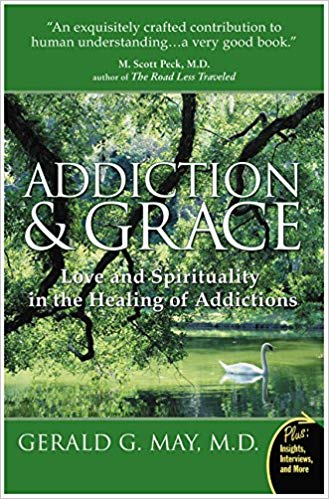
ADDICTION AND GRACE:
Love and Spirituality in the Healing of Addictions
by
Gerald G. MaY, M.D.
Gerald G. May, M.D. (1940-2005) was a psychiatrist, spiritual counselor and Senior Fellow in Contemplative Theology and Psychology at the Shalem Institute for Spiritual Formation in Bethesda, Maryland. He wrote many books and articles blending spirituality and psychology. (Excerpt taken from book cover.)
The Shalem Institute is grounded in Christian contemplative spirituality yet draws on the wisdom of many religious traditions. As a result Dr. May references various religious traditions in his writing.
This may be off-putting to some. However, I’ve found far more of his content valuable than not. I’m not a theologian, philosopher nor am I one to argue doctrine. My personal practice when reading different books is to take what I can use and leave the rest.
There is much to praise Addiction and Grace for. Especially being written in the late 1980’s, I believe many of May’s ideas and psychological thoughts on addiction were ahead of his time and may still be.
Addiction and Grace isn’t a quick read. Each sentence, paragraph and chapter will provide you with much to contemplate and ruminate on. You will find an in-depth study of the psychological layers of addiction, as well as how they effect our mind, body and spirit. Dr. May shares personal struggles and stories of several people he counseled with different types of addictions.
For me, having read this book twice, the best take-away was and continues to be in the last paragraph of the book:
“The specific struggles we undergo with our addictions are reflections of a blessed pain. To be deprived of a simple object of attachment is to taste the deep, holy deprivation of our souls. To struggle to transcend any idol is to touch the sacred hunger God has given us.” ~ Gerald G. May, M.D.
Blaise Pascal wrote about the God-shaped vacuum that we all have. This deep longing in our souls can never be satiated by anything created in this world. Dr. May is teaching us that we aren’t supposed to re-direct that longing to anything. He suggests we not only make friends with the empty place, but come to fall in love with it. Scripture teaches it is possible to be comfortable with and live with the pain. The Apostle Paul learned and accepted that God’s grace is sufficient!
I highly recommend Addiction and Grace by Gerald G. May, M.D. I hope you’ll consider reading this power packed book to deepen your walk with God as you continue to press through your own personal pain and struggles.