

PAIN MEMORY

little girl in pain

All of us make mistakes. We hope to learn from our failures and not repeat them. Unfortunately, for most of us this isn’t the case. We seem doomed to go round and round our mountains until we’ve worn a deep trench that resembles a castle moat.

It dawned on me one day that we have pain memory but it doesn’t seem to last very long. We remember when we touched that hot stove not to do it again. 


Why can’t we remember emotional pain causing events? 

What about bad habits that we allow to creep back in and again cause us the same old pain from before. 


Scripture likens humans to sheep, who are very dumb animals, cute but dumb. If the sheep didn’t have their shepherd to follow they would literally walk off the cliff. The leader would start off the cliff and the others would follow. Now that’s dumb. Sound familiar?

We may see someone doing something that looks like fun and follow them only to find a cliff edge waiting. Forget about following others. We can follow our own nose right off the cliff. 

An important difference between humans and other animals is our ability to make conscious choices. Just following our sensory perceptions: sight, smell, taste, touch, hearing; can easily get us into trouble. But if we can be more aware in the moment, making conscious choices, we will be better off.

The problem is we are dumb sheep and get distracted easily. Before we know it we are at that cliff edge again.

The key is in who and what we are following. This is a daily, hourly, even momentary discipline that must be intentionally practiced.  

Who / What am I following today?

Image credit: lordalea / 123RF Stock Photo
A Monk in the World :: BALANCE

IN A MONK IN THE WORLD WE ARE LEARNING THE PRINCIPLES OF CHRISTIAN MONASTICISM AND HOW WE CAN APPLY THEM TO OUR LIVES OUTSIDE THE MONASTERY WALLS.  THIS MONTH’S TOPIC IS BALANCE.


Balance

bal·ance noun

: the state of having your weight spread equally so that you do not fall

: the ability to move or to remain in a position without losing control or falling

: a state in which different things occur in equal or proper amounts or have an equal or proper amount of importance

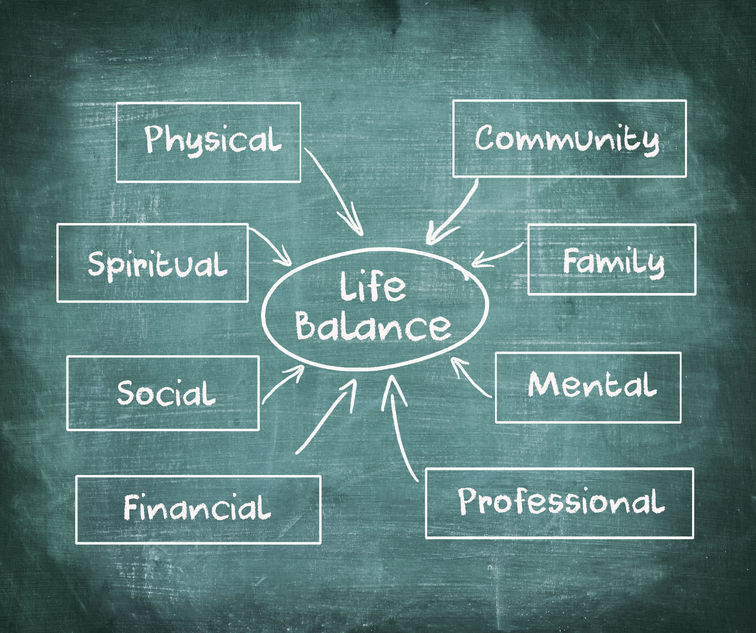
If there is one thing we all have trouble with it’s balance; between our daily schedule, priorities, money, food, exercise, media, rest, work, play, etc…


Just as King Solomon said there’s nothing new under the sun. And the challenge of balance isn’t new for sure! Saint Benedict of Nursia knew this well and it was a priority in his Rule for the monks under his charge.

Balance is a running theme in Saint Benedict’s Rule. It’s easy to romanticize the idea of being behind a monastery wall thinking that once away from all the worldly influences and distractions we could actually achieve balance in our lives.

Even in Benedict’s day the monks struggled in this area, so they were given strict guidelines to follow. Yet with almost every rule exceptions were made. Benedict not only accepted humanness but gave grace for it.

KEYS TO FINDING BALANCE: 

  • Create a daily routine: Write out what your perfect day or week would look like and plan toward it. Give yourself grace when life shows up with a kink in your plan.
  • Use timers: Use your smart phone for more than games or FaceBook. Timers or calendar reminders are critical to keep me on my schedule.
  • Be flexible: There are exceptions to all our plans. Just when I think I’ve got the perfect plan, God shows up with something better!

I quickly admit that I don’t have this balance thing figured out. Some days and weeks I do really well, then life shows up and there goes my perfectly planned schedule. The best thing I can do then is start again.  Recognition that there is need for balance is the beginning of actual change. I believe moderation brings about balance. So my life motto today is:

MODERATION IN ALL THINGS INCLUDING MODERATION!


RESOURCES:

Spirituality For Everyday Living: An Adaptation of the Rule of St. Benedict by Brian C. Taylor
Monk Habits for Everyday People: Benedictine Spirituality for Protestants by Dennis Okholm
Seeking God: The Way of St. Benedict by Esther de Waal


*Definition courtesy Mirriam-Webster.com
Image credit: paktaotik2 / 123RF Stock Photo