
12 Steps of Humility :: PERSEVERANCE

EACH MONTH IN THE 12 STEPS OF HUMILITY WE ARE CLIMBING SAINT BENEDICT’S LADDER OF HUMILITY.  WITH EACH RUNG WE COME CLOSER TO THE PERFECT LOVE OF GOD.

The ladder is our life on earth, if we humble our hearts God will raise it to heaven. ~ St Benedict

Step 4 of Humility: In this obedience under difficult, unfavorable, or even unjust conditions, [her] heart quietly embraces suffering and endures it without weakening or seeking escape.

If you remain faithful to the end you will be saved. ~ Matthew 10:22 


In our world today we want any trial we are facing to be corrected yesterday. We don’t have time, nor are we willing to persevere through the crisis.  This leaves us living as spiritual infants.

According to Saint Benedict in our obedience, we are to hold fast when things aren’t going our way. And the only way to do that is to stay centered on God!

We must take our eyes off the circumstances and how we want things to be and remember everything in life can be a learning opportunity if we allow it.

I love this Webster 1828 definition:

perseverance: continuance in a state of grace to a state of glory.


When we are walking in God’s grace we are more likely to give Him glory. But we can’t be walking in His grace with our eyes on the ground, or on the circumstances or the rearview mirror, or on ourself.

God will only get the glory if we keep Him in the center minute by minute.


RESOURCES:
The Rule of Saint Benedict by Saint Benedict, Edited by Timothy Fry, O.S.B.
Twelve Steps to Inner Freedom: Humility Revisited by Joan D. Chittister**
The Twelve Steps of Humility and Pride by Bernard of Clairvaux
Living in the Truth: Saint Benedict’s Teaching on Humility by Michael Casey

Image credit: designerkrim / 123RF Stock Photo
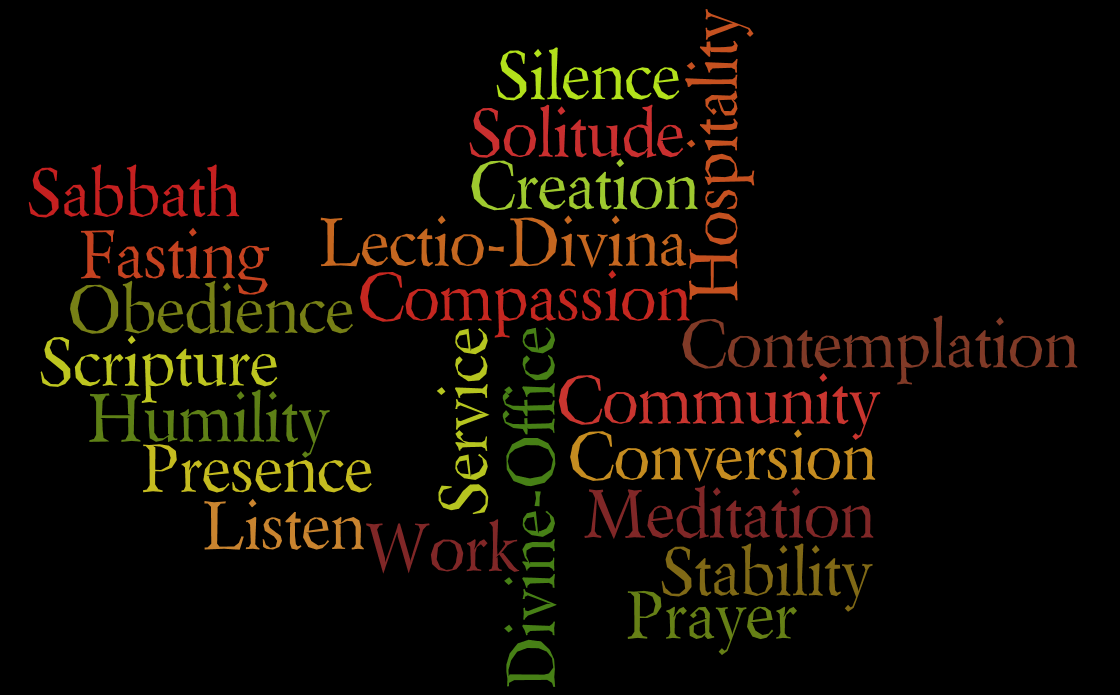
A Monk in the World ::OBEDIENCE

IN MONK IN THE WORLD WE ARE LEARNING THE TEACHINGS AND PRINCIPLES OF CHRISTIAN MONASTICISM AND HOW WE CAN APPLY THEM TO OUR LIVES OUTSIDE THE MONASTERY WALLS. TODAY WE’RE FOCUSING ON the vow of Obedience.


Closely linked to Step 2 of Humility is the discipline of obedience.  In the Benedictine monastic community the members profess three vows: obedience, stability and a life of on-going conversion. Implicit in these are the evangelical vows of chastity and poverty.


Obedience… is not one of our favorite words. Most of us like to think we don’t have to follow all the rules. Some would even say rules are made to be broken. But the truth is most rules are made to protect us from something. 

The root word of obedience is a Latin word for listen. When we want someone to obey us we are really asking them to listen to us. Thinking in this way obedience doesn’t seem so harsh. Isn’t this all God is asking of us? That we listen to Him? After all, He has our best interest in mind when He asks us to do something. 

In the book of Romans the Apostle Paul says obedience comes from faith, (1:5) faith comes from hearing God’s Word (10:17) and that we are mutually encouraged by each other’s faith (1:12). Which leads us to our next point.

In the spirit of Benedictine obedience, I should practice “mutual obedience”  obeying not only those in authority over me but also my fellow brothers and sisters. This fosters harmony in our communities and households. When we see others as the voice of God we will be better listeners.

Obedience is not what we expect from others, it is what we do ourselves for others… Obedience says: Set aside what you are doing. Focus your attention on the person before you to discern what God is asking you to do.  (St. Benedict’s Toolbox)**

Our response to obedience must be joyful and spontaneous. More than the action itself, what matters is the attitude of our heart. When we respond without grumbling, replacing competitiveness with consideration we can live a life of obedience as Saint Benedict teaches in his Rule.

If you can’t see the screen below CLICK HERE for a beautiful worship song by Chris Tomlin.

RESOURCES:
**St. Benedicts Toolbox: The Nuts and Bolts of Everyday Benedictine Living by Jane Tomaine
Monk Habits for Everyday People: Benedictine Spirituality for Protestants by Dennis Okholm
How to be a Monastic and Not Leave your Day Job by Br. Benet Tvedten