
The 12 Principles of Recovery :: AWARENESS

My recovery work this year is focused on The Principles behind the 12 Steps, asking key questions that will help to learn these core values and put them into practice. 



STEP 2: Came to believe that a Power greater than ourselves could restore us to sanity.

PRINCIPLE TWO: Awareness


KEY QUESTIONHow do I know what is real?

As an addict I lived the bulk of my life unaware of those around me, clueless to how my behavior affected others, actually not seeing much of the world at all. But after I turned back to God, I had an amazing experience of awareness in, of all places, Walmart! 

 
On a hot summer day, I was shopping for groceries when suddenly it was as if scales fell off my eyes and I could see people all around me. Like the day I got my first pair of glasses, and I saw the trees weren’t just green blobs, they actually had individual leaves. 

Where did all these people come from? 

Had there always been so many people in the world that I never saw?

Not only could I suddenly see the people, God gave me the ability to look into their heart and spirit, almost like an x-ray, I was seeing their emotional pain. It was overwhelmingly heartbreaking. I wandered through Walmart thinking…

What can I do? I’ve got to help them. But who am I to help them? I’m nobody.

This incredible awareness stayed heavy on me for months. It was almost too much to endure. It was as if God gave me a taste of what He sees every minute of every day. This experience has repeated only a few times since that day in Covington, LA. But it changed my life forever.
 
This is what Principle Two wants for us. To be aware, not only of ourselves and the world, but to be aware of how our behavior touches others, to be sensitive to the needs of those around us.
 

To answer this month’s key question, How can I know what is real?  We must look to God. I believe this answer comes only by divine revelation, after much seeking, prayer and meditation. God promises to make Himself real to us if we seek Him. And with that our awareness begins.

Wake up, sleeper, rise from death and Christ will shine on you. ~ Ephesians 5:14


RESOURCES:
A Gentle Path through the Twelve Principles: Living the Values Behind the Steps by Patrick Carnes

Image credit: carpathianprince / 123RF Stock Photo
A Monk in the World ::OBEDIENCE

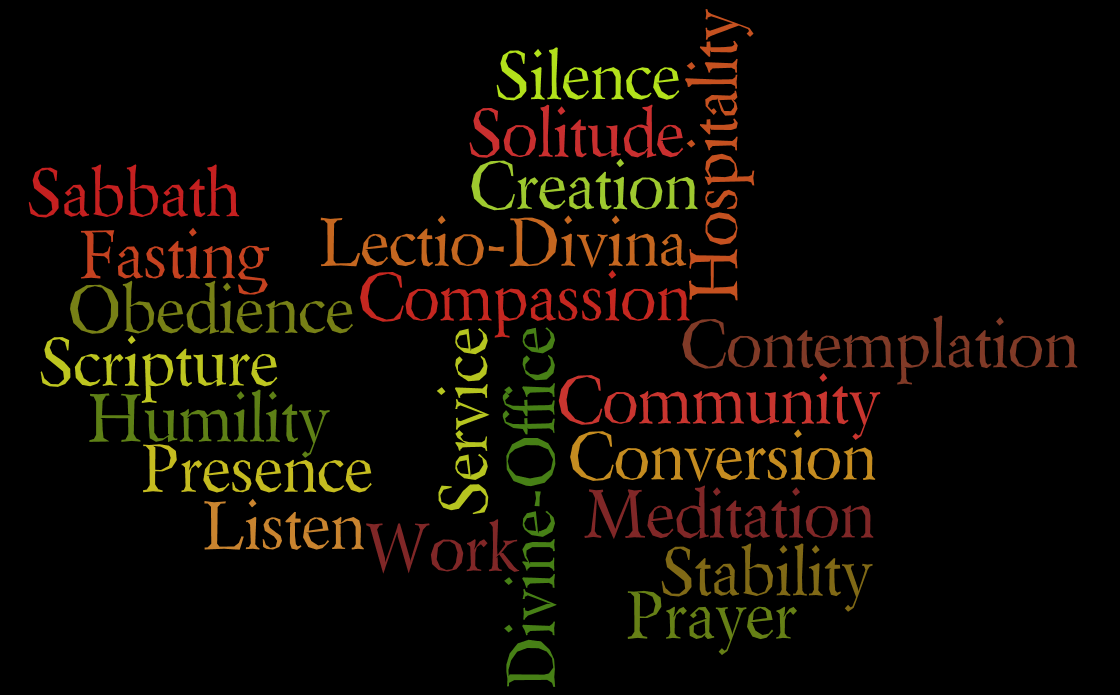
IN MONK IN THE WORLD WE ARE LEARNING THE TEACHINGS AND PRINCIPLES OF CHRISTIAN MONASTICISM AND HOW WE CAN APPLY THEM TO OUR LIVES OUTSIDE THE MONASTERY WALLS. TODAY WE’RE FOCUSING ON the vow of Obedience.


Closely linked to Step 2 of Humility is the discipline of obedience.  In the Benedictine monastic community the members profess three vows: obedience, stability and a life of on-going conversion. Implicit in these are the evangelical vows of chastity and poverty.


Obedience… is not one of our favorite words. Most of us like to think we don’t have to follow all the rules. Some would even say rules are made to be broken. But the truth is most rules are made to protect us from something. 

The root word of obedience is a Latin word for listen. When we want someone to obey us we are really asking them to listen to us. Thinking in this way obedience doesn’t seem so harsh. Isn’t this all God is asking of us? That we listen to Him? After all, He has our best interest in mind when He asks us to do something. 

In the book of Romans the Apostle Paul says obedience comes from faith, (1:5) faith comes from hearing God’s Word (10:17) and that we are mutually encouraged by each other’s faith (1:12). Which leads us to our next point.

In the spirit of Benedictine obedience, I should practice “mutual obedience”  obeying not only those in authority over me but also my fellow brothers and sisters. This fosters harmony in our communities and households. When we see others as the voice of God we will be better listeners.

Obedience is not what we expect from others, it is what we do ourselves for others… Obedience says: Set aside what you are doing. Focus your attention on the person before you to discern what God is asking you to do.  (St. Benedict’s Toolbox)**

Our response to obedience must be joyful and spontaneous. More than the action itself, what matters is the attitude of our heart. When we respond without grumbling, replacing competitiveness with consideration we can live a life of obedience as Saint Benedict teaches in his Rule.

If you can’t see the screen below CLICK HERE for a beautiful worship song by Chris Tomlin.

RESOURCES:
**St. Benedicts Toolbox: The Nuts and Bolts of Everyday Benedictine Living by Jane Tomaine
Monk Habits for Everyday People: Benedictine Spirituality for Protestants by Dennis Okholm
How to be a Monastic and Not Leave your Day Job by Br. Benet Tvedten